-
1Pico Papagaio
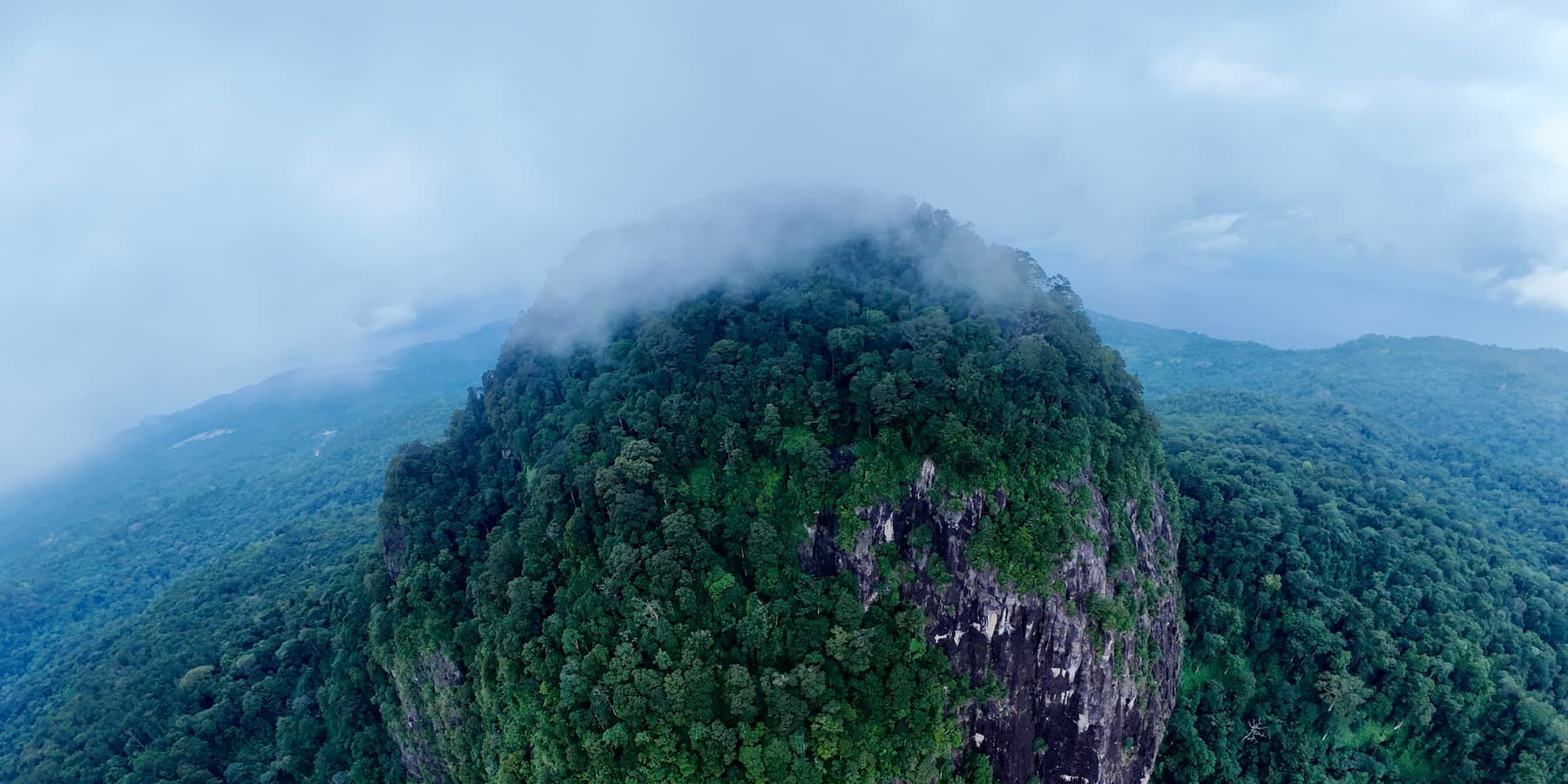
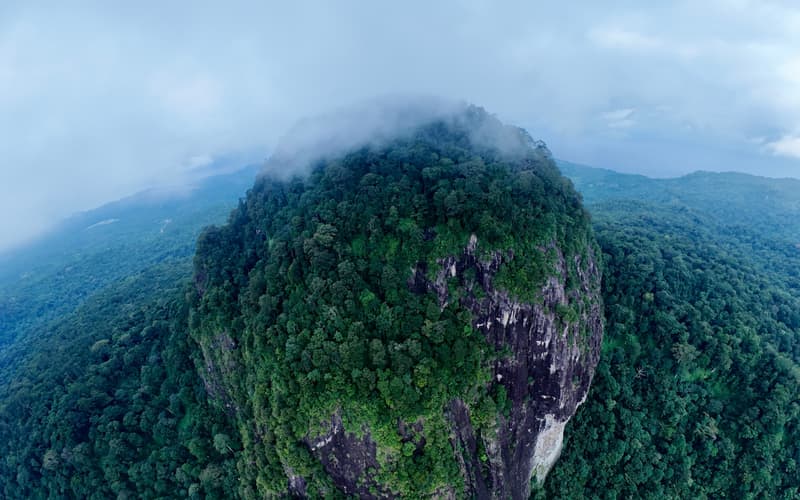
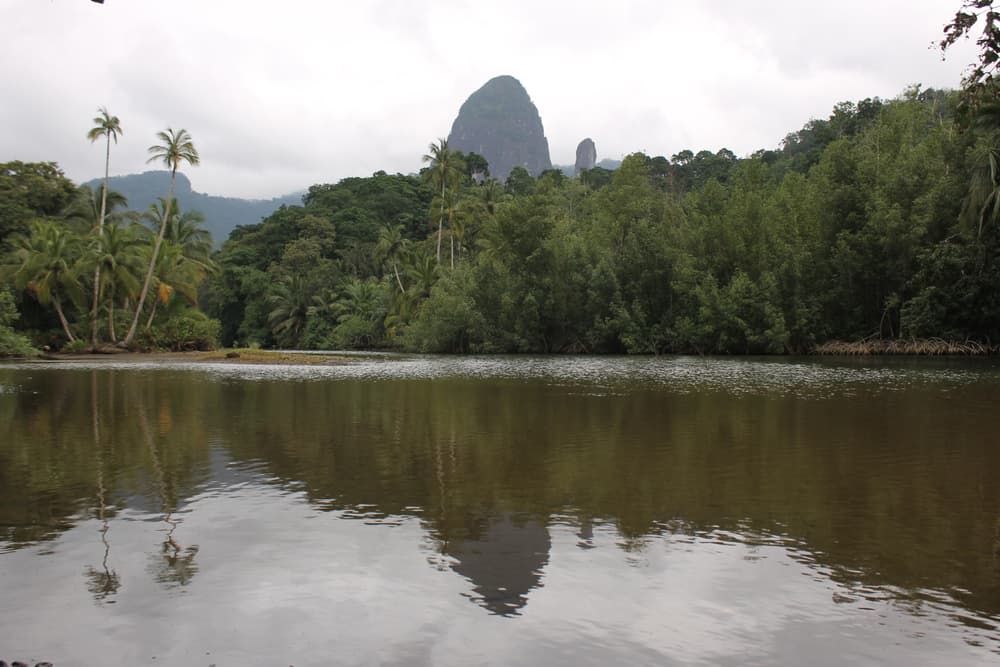
“Parrot Peak” is the forested cone, about 680 metres high, that rises directly behind Santo António. A steep trail climbs through abandoned plantation and secondary forest to a summit with views over the town, the north of the island and, on a clear day, the peaks of the south.
ℹ️ About 4–5 hours return with a guide. Steep and slippery; best in the drier months.
-
2The southern peaks and Baía das Agulhas
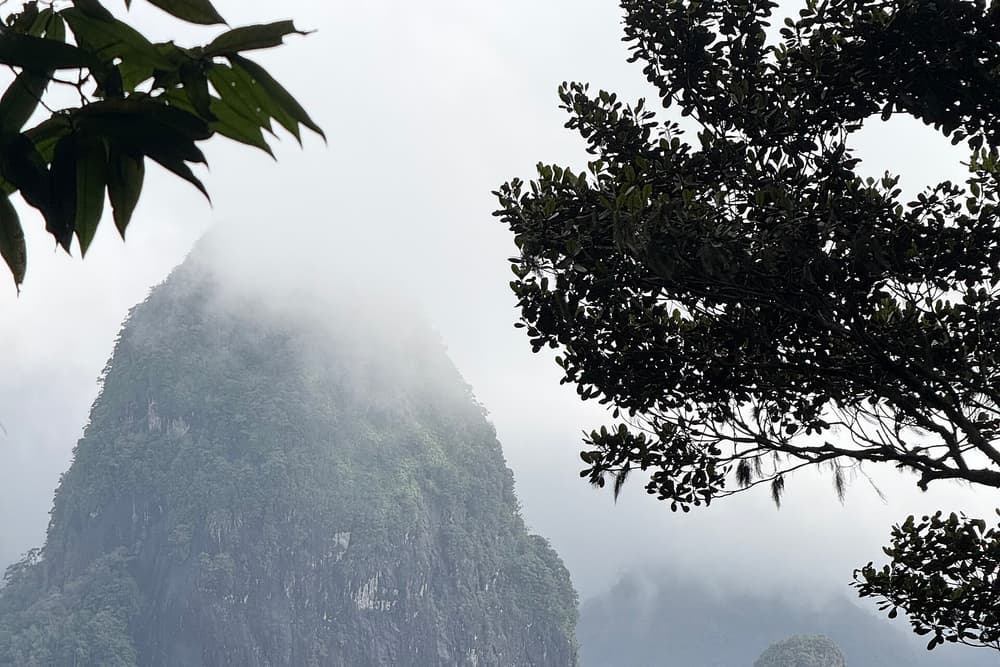
Seen from Pico Papagaio, the south of Príncipe is a mass of sharp, jungle-covered summits such as Morro Fundão. From the sea they become the “needles” of Baía das Agulhas: a row of dark rock spires, including the flat-topped Mesa and the pinnacle known as João Dias Pai, above a bay of perfectly still green water.
ℹ️ By boat only; half or full day. Trips depend on sea conditions. Bring sun protection and a dry bag.
-
3Mangroves
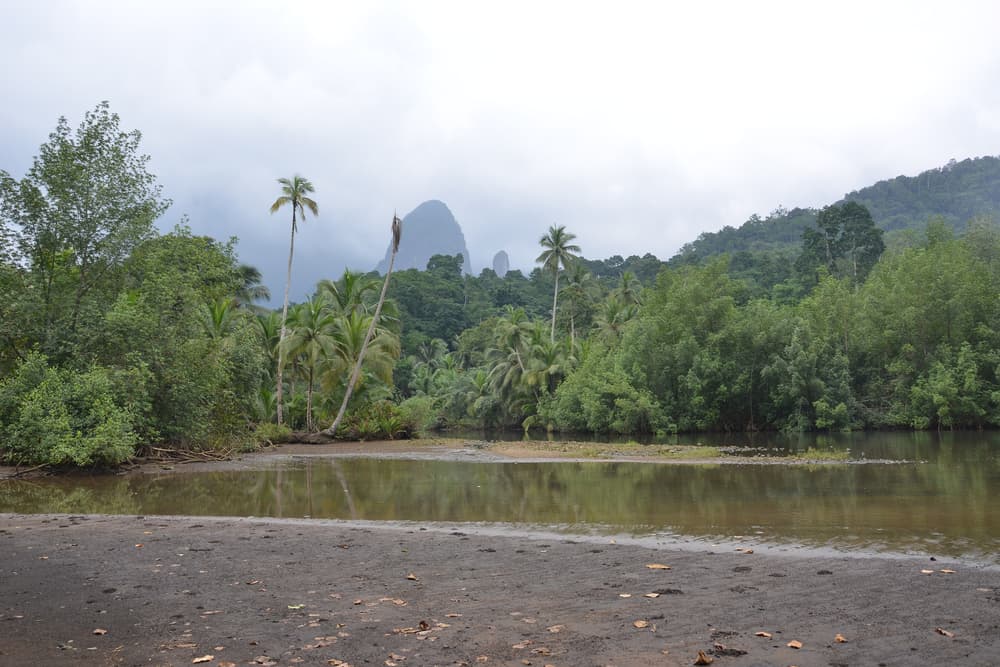
Small mangrove stands survive where rivers meet sheltered beaches, as at Praia Caixão. Their tangled roots are nurseries for fish and crabs and good places to look for kingfishers and herons.
ℹ️ On foot with a guide, ideally around low tide.
-
4Praia Salgada and Abade
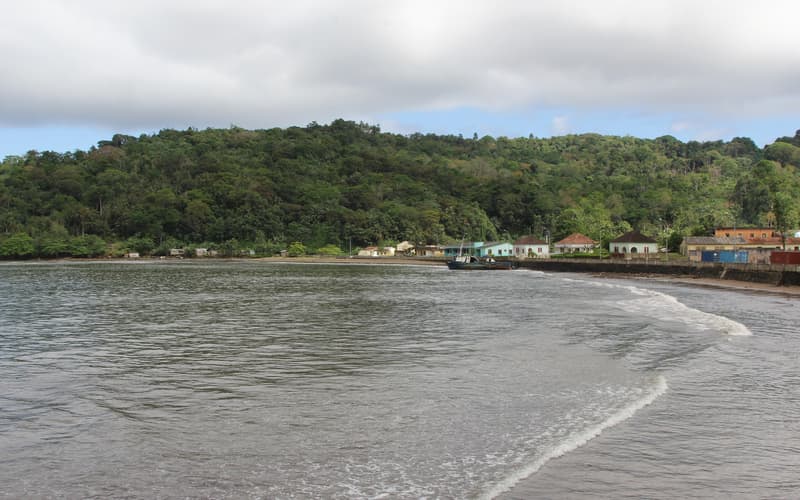
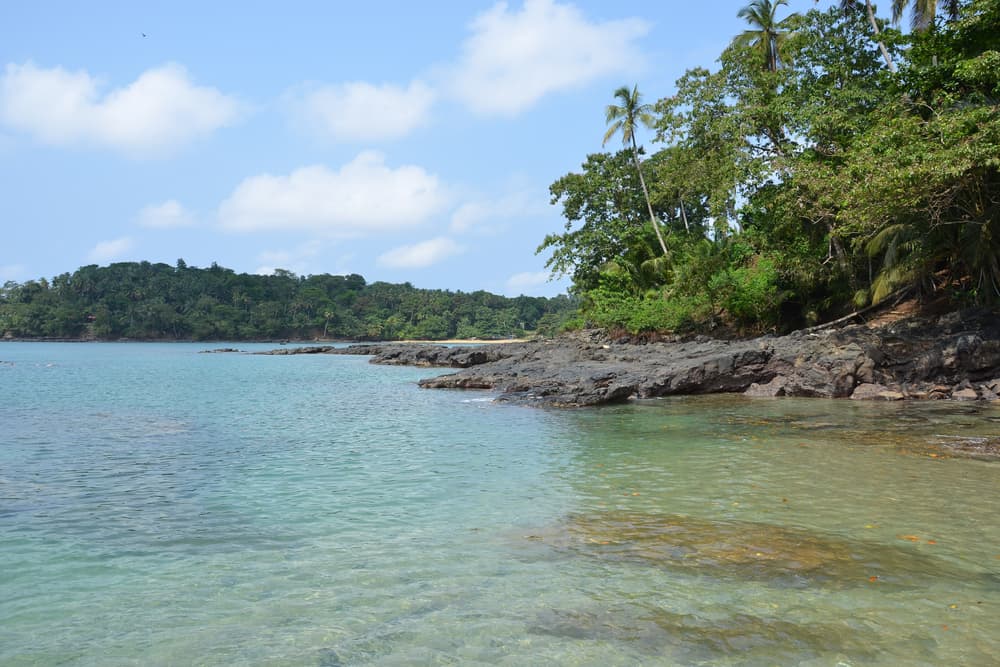
On the east coast near the fishing community of Abade, Praia Salgada is a quiet beach framed by rocks and palms. It shows the Biosphere idea in practice: a working village, its fishing grounds and a protected coast side by side.
ℹ️ By road and a short walk. Be respectful — this is a community beach.
-
5Reefs and marine life
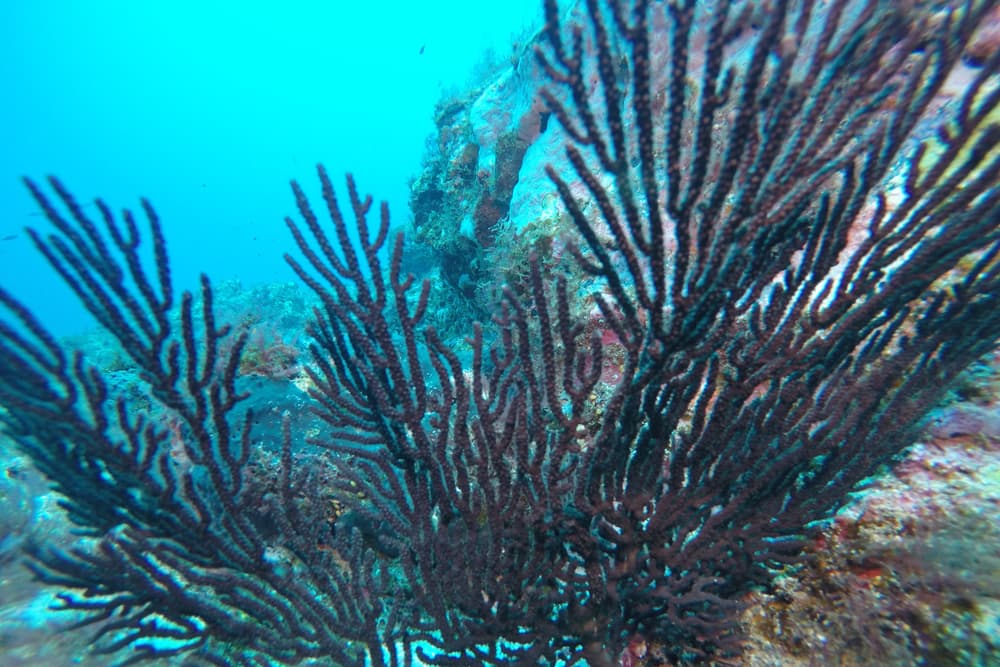
Príncipe has no coral reefs in the classic sense, but its volcanic rock shores are covered in corals, sponges and sea fans, with turtles, rays and clouds of reef fish. Boat trips stop for snorkelling, and diving can sometimes be arranged through the lodges.
ℹ️ Visibility is generally best in the drier months. Bring your own mask if possible.
-
6Seabird islets
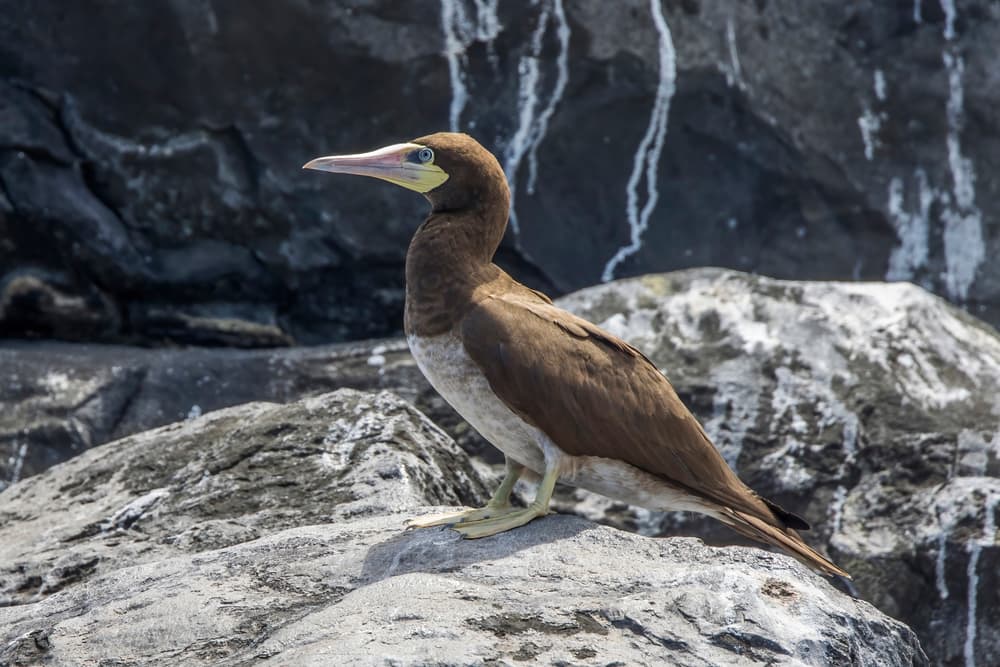
Offshore rocks and islets — Pedra da Galé, the Tinhosas far to the south, the cap-shaped Boné de Jóquei — hold large colonies of brown boobies, noddies and terns. They are part of the reserve and among the most important seabird sites in the Gulf of Guinea.
ℹ️ Seen from boats; landing is not permitted on the breeding islets.
-
7Endemic forest birds
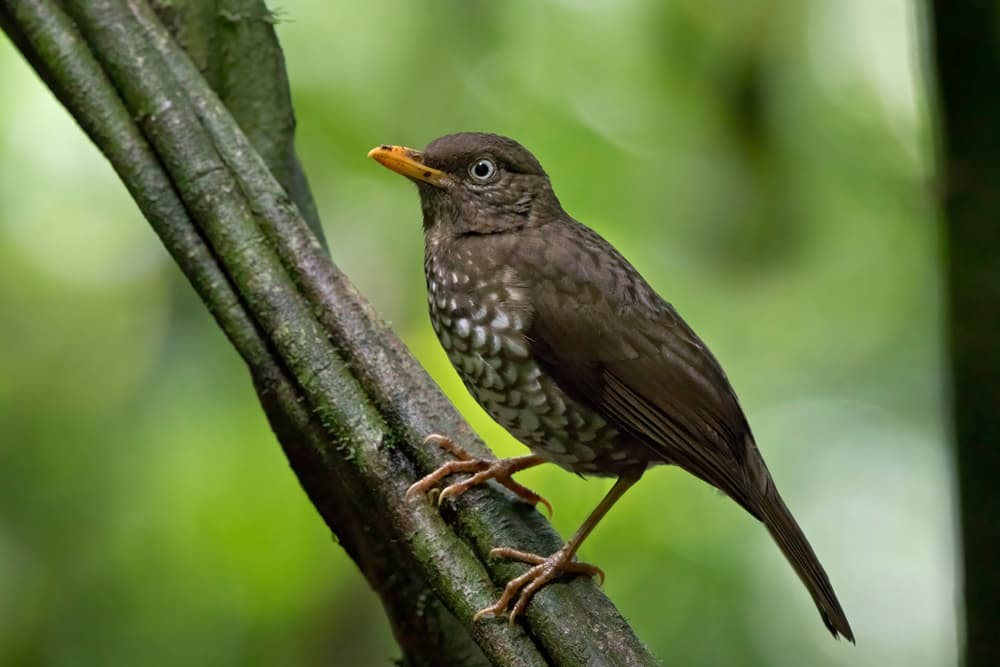
The Príncipe thrush, found only in the island’s southern forest, is one of several species unique to Príncipe, alongside the Príncipe sunbird, golden weaver, speirops and kingfisher. In 2022 a new owl, the Príncipe scops-owl, was formally described from these same forests.
ℹ️ The commoner endemics are easy around the north; the thrush and owl need a long guided trek.
-
8Wild beaches
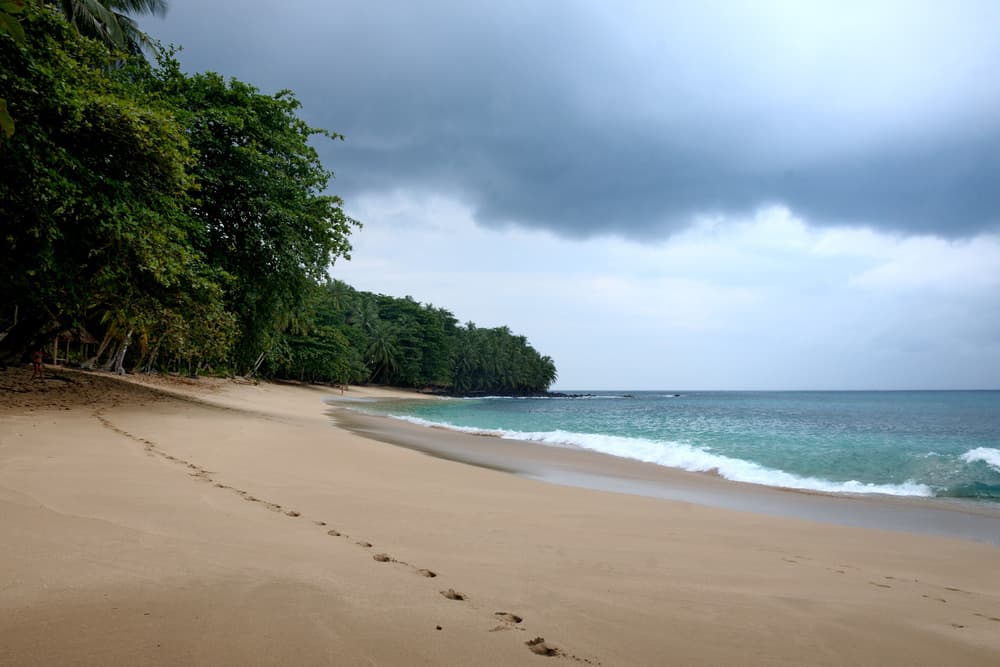
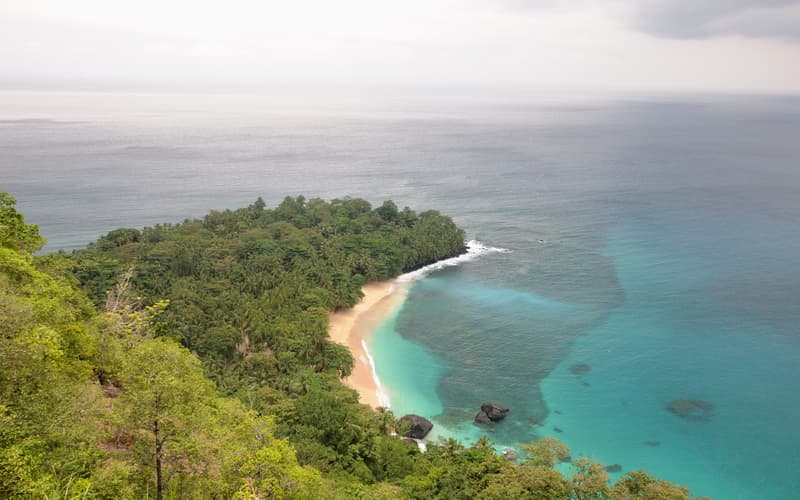
Much of the coast inside the reserve is reachable only on foot or by sea. Coves such as Praia Caixão are typical: sand, a stream, forest and no buildings at all.
ℹ️ Combine with a boat trip or guided walk. No facilities.
Turtles and whales
Praia Grande, on the east coast, is the island’s principal turtle-nesting beach, patrolled in season by local rangers who lead visitors at night. Humpback whales migrate past between about July and October and are sometimes seen from boats and headlands.