Why visit
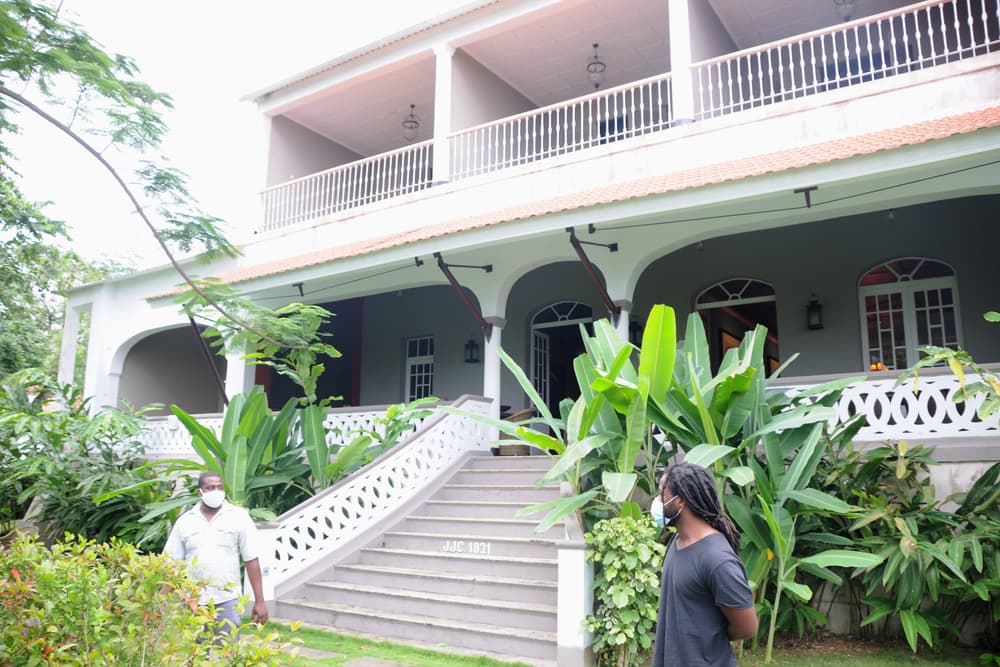
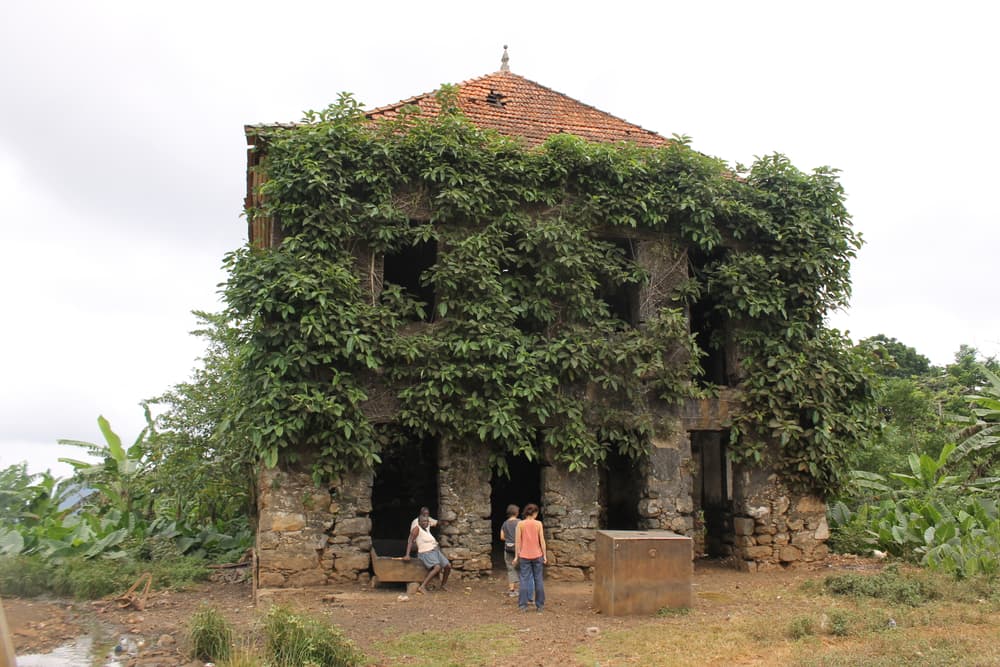
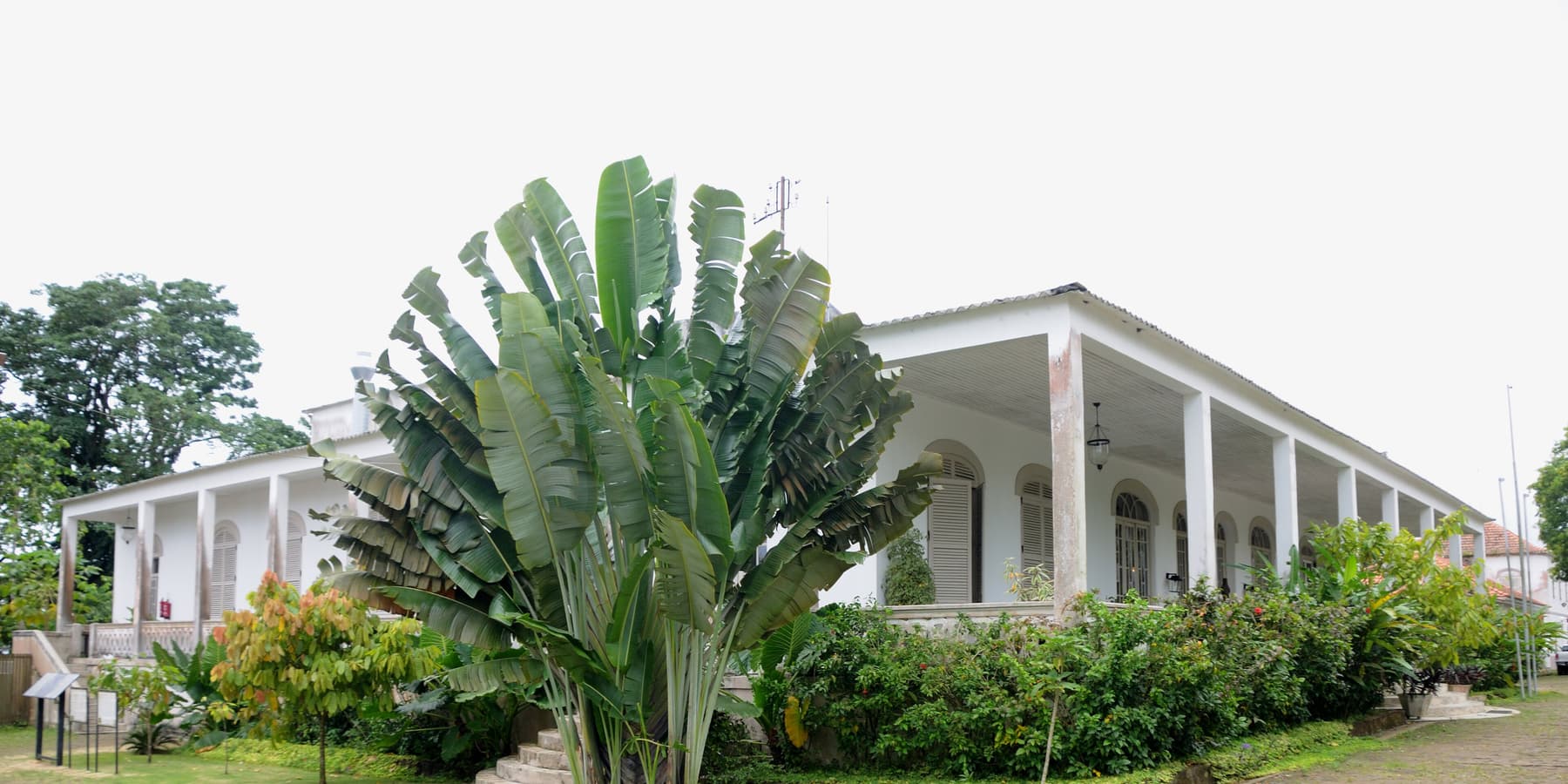
Roça Sundy sits on a plateau in the north-west of Príncipe. It was one of the island’s great cocoa estates — tradition holds that cocoa was first planted on Príncipe in the 1820s, before spreading to São Tomé — with a walled main square, a chapel, stables, a hospital and its own railway.
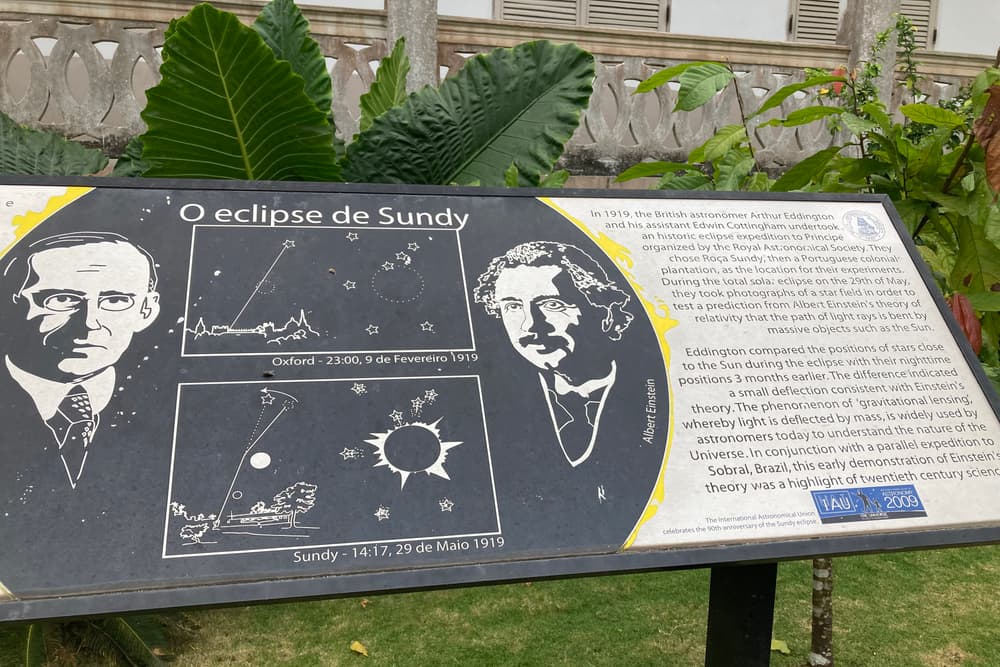
On 29 May 1919 it became the setting for one of the most famous experiments in physics. The British astronomer Arthur Eddington, with Edwin Cottingham, set up telescopes here to photograph stars close to the Sun during a total solar eclipse. Their plates, together with those from a sister expedition to Sobral in Brazil, showed starlight bending by the amount predicted by Einstein’s general theory of relativity. The result made Einstein a household name.
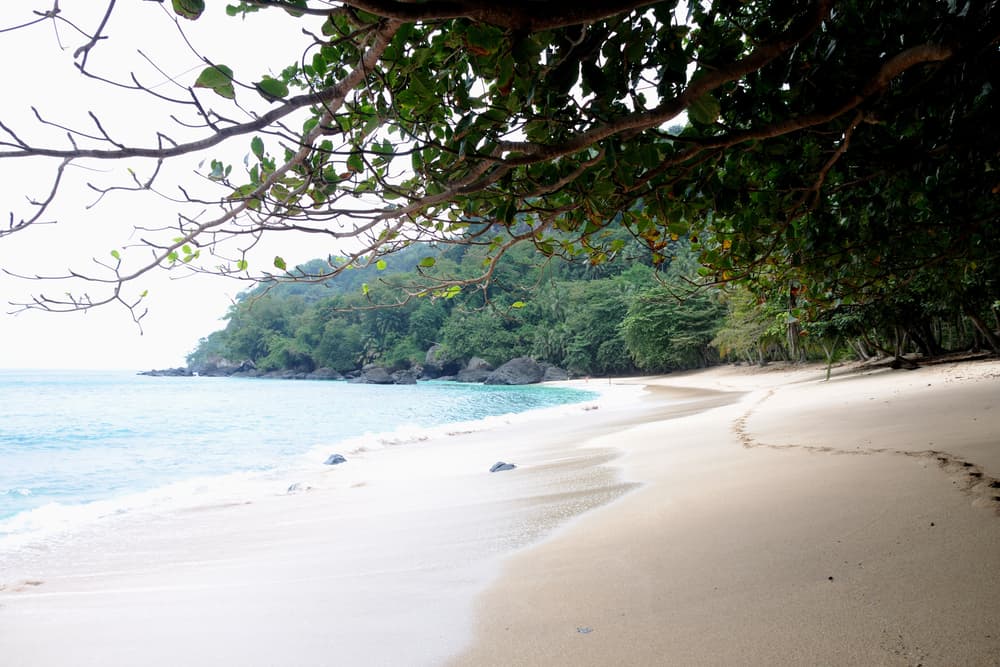
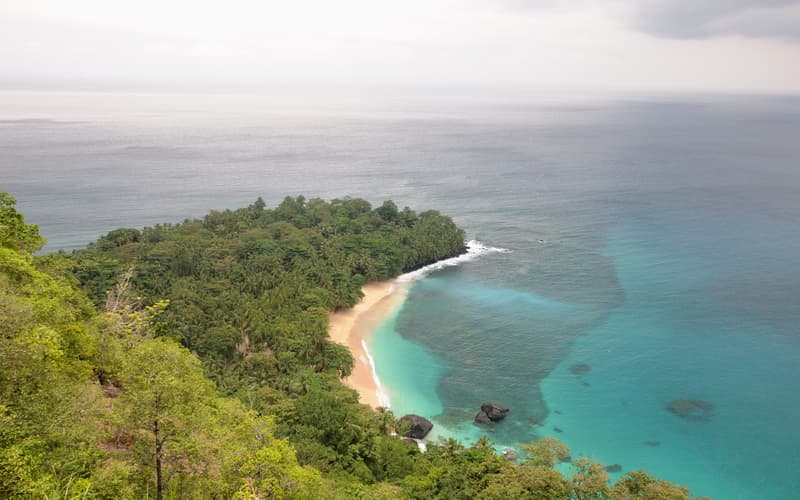
Roça Belo Monte, on the north-east coast, is a smaller estate from the early 20th century, restored as a hotel. Its clifftop lookout over Praia Banana is the most photographed view on the island.
A place people still live
As on São Tomé, Príncipe’s plantations ran on forced contract labour, largely from Cape Verde and Angola, and the descendants of those workers still live in the old quarters at Sundy. Restoration here has gone hand in hand with projects to rehouse and employ the community. Visit with that in mind.
How long to stay
Allow two hours for Sundy and an hour for Belo Monte and its lookout. Both can be seen in a day from Santo António, or you can stay in either plantation house.
Roça Sundy & Belo Monte highlights
- Standing where the 1919 eclipse was observed
- The exhibition on Eddington, Einstein and relativity
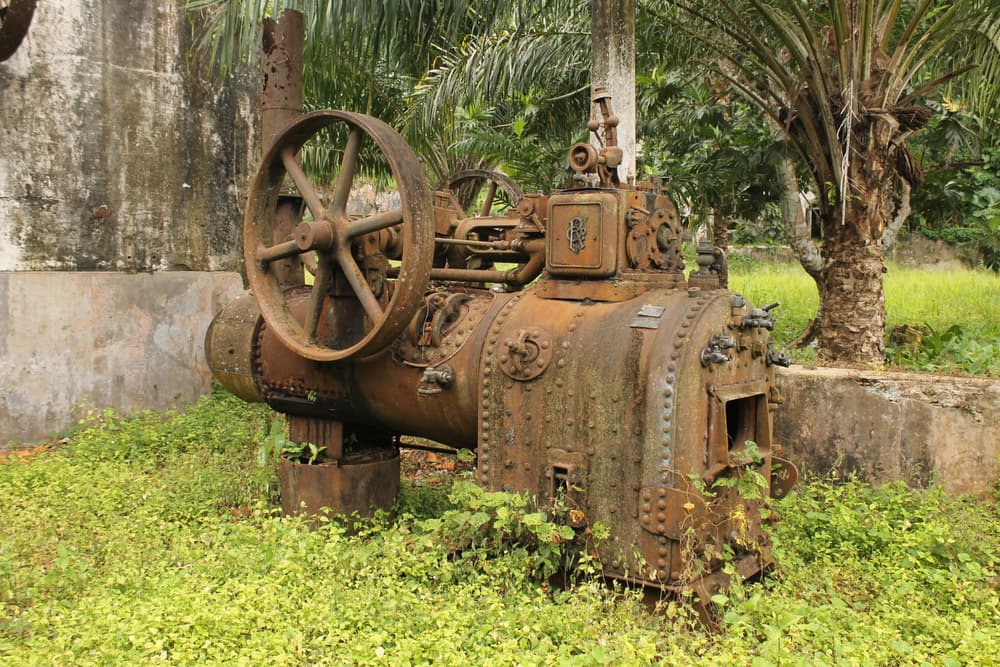
- Sundy’s walled square, chapel and old machinery
- The Belo Monte lookout over Praia Banana
- Seeing cocoa grown and dried on a working estate
- A night in a restored plantation house