Why visit Santo António
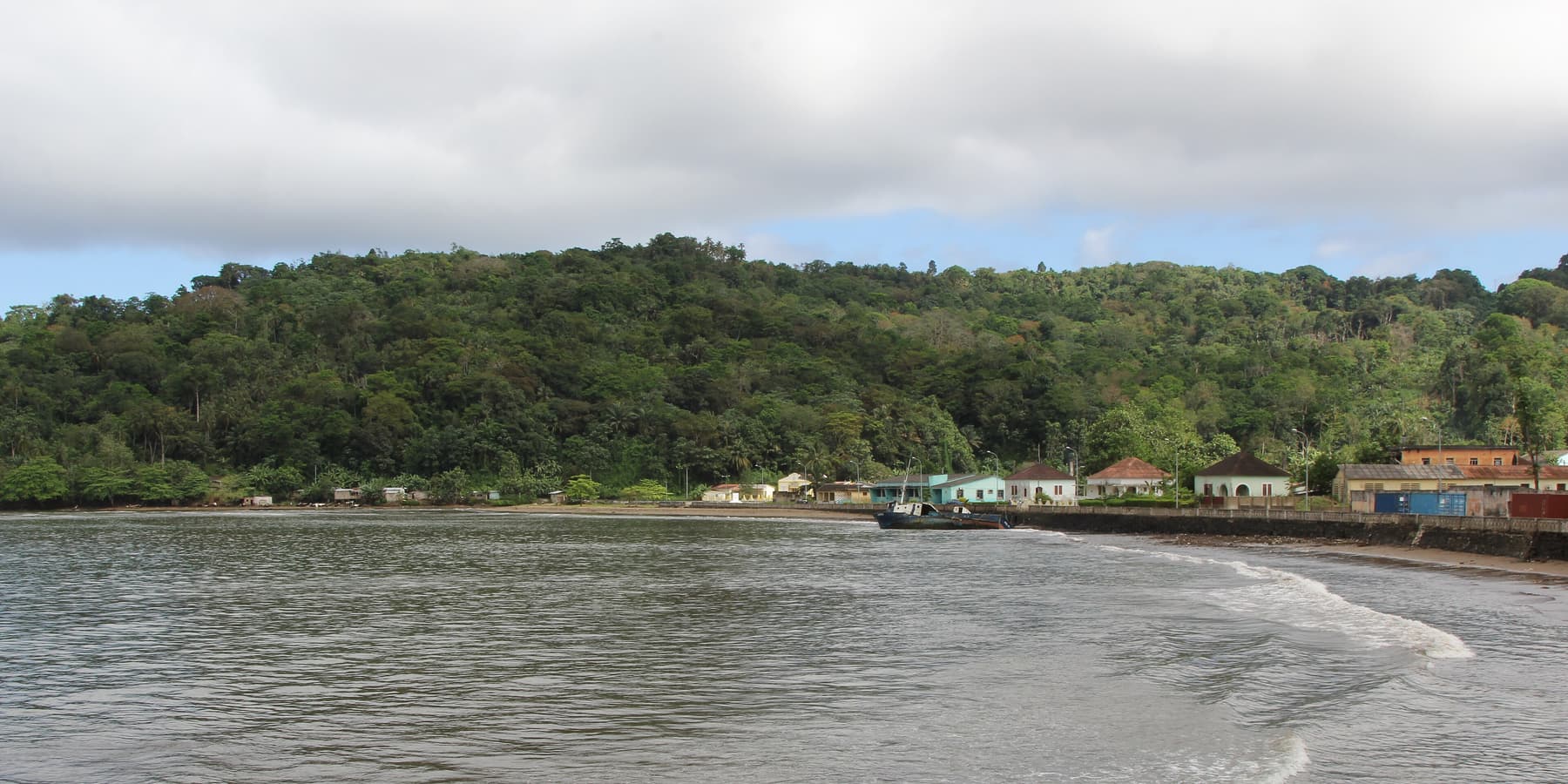
Príncipe has about 8,000 inhabitants, and a couple of thousand of them live in Santo António, set on a sheltered bay where the Papagaio river meets the sea. Founded in the early 1500s, it was for a century — from 1753 to 1852 — the capital of the whole Portuguese colony. Today it is the seat of the island’s autonomous regional government and likes to describe itself as the world’s smallest city.
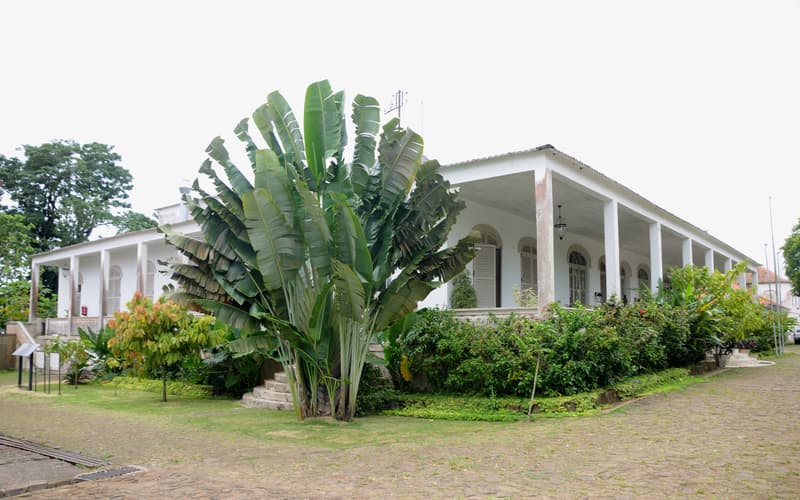
There are no grand sights. What Santo António offers is atmosphere: a handful of streets of faded colonial houses in pink, yellow and blue, a church, a small market, a waterfront where the fishing canoes come in, and forested hills rising straight behind the rooftops. People greet you in the street.
It is also the island’s practical centre — the place for guesthouses, simple restaurants, a bank, shops, and guides and drivers for trips to the beaches, roças and forest.
How long to stay
An hour or two is enough to walk every street. As a base, plan at least three nights on Príncipe; many visitors spend one in town and the rest at a lodge, or stay in town throughout to keep costs down.
Where to base yourself
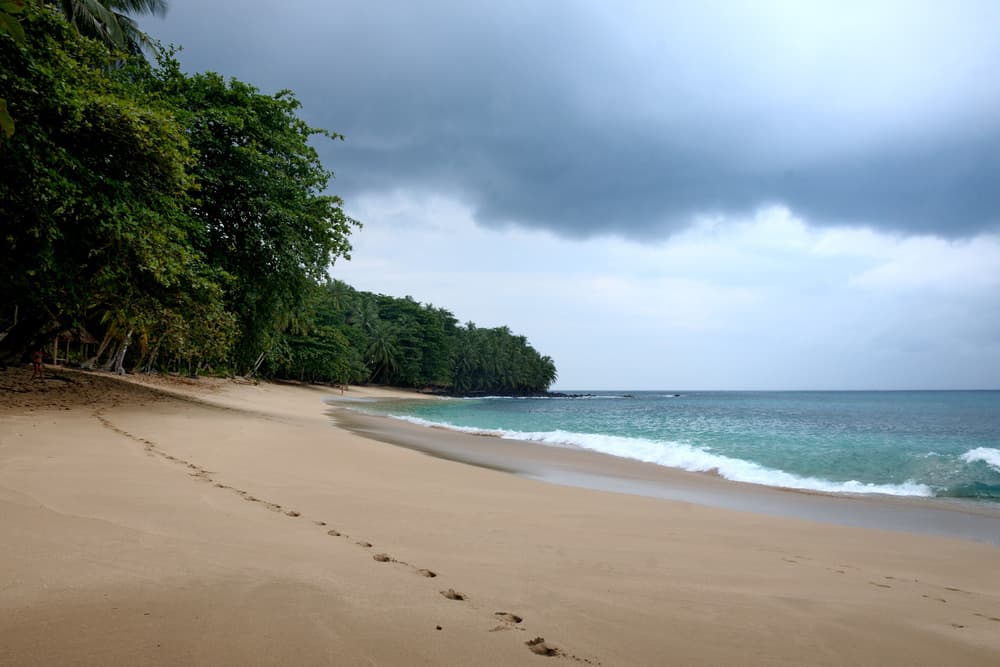
Town guesthouses are simple, friendly and far cheaper than the lodges, and they put you within walking distance of places to eat. The trade-off is that the best beaches are a drive away.
Santo António highlights
- Wandering the colonial streets at walking pace
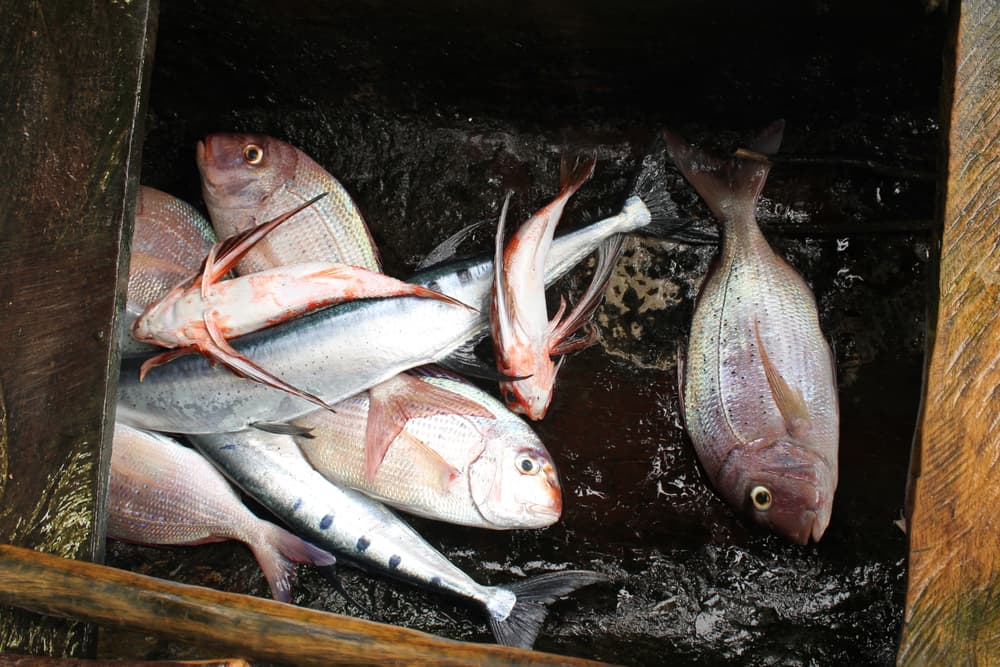
- The waterfront when the fishing boats return
- The church of Nossa Senhora da Conceição
- The Auto de Floripes street theatre in mid-August
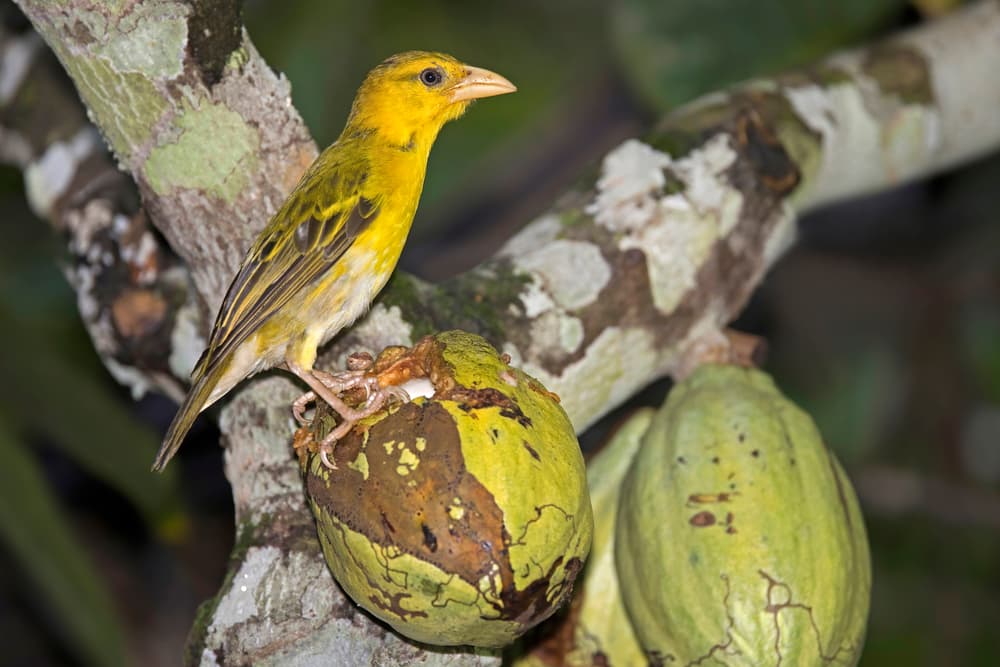
- Endemic birds in the town’s gardens
- Fresh fish in a family-run restaurant